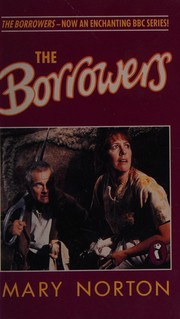
The Borrowers
core novel 1952 The Borrowers
Record
| First published | 1952 |
|---|---|
| Original language |  EN |
| Work type | novel |
| Canon status | core |
| Reader rating | 4.03 (102,302 ratings, collected 2026-09-06) |
| Page count | 180 |
| First-edition ISBN | 9780140363432 |
| Internal chronology | 1 |
Synopsis
The Borrowers is a children's fantasy novel by Mary Norton, first published in 1952, told as a frame narrative in which an elderly woman named Mrs. May relates the story to her young niece Kate. It introduces the Clock family, tiny people who live secretly beneath the floors of an old English country house near Leighton Buzzard, surviving by "borrowing" everyday items from the human occupants above. Fourteen-year-old Arrietty Clock, more curious about the human world than her cautious parents Pod and Homily, is eventually seen by a lonely ten-year-old boy recently arrived from India and recovering from illness, and the two strike up a secret friendship, trading small gifts and books for her company. Their arrangement is jeopardized when the household's suspicious housekeeper, Mrs.
Where it sits
- Universe: The Borrowers
- Series: The Borrowers core; position 1 of 5 in the series' recorded order
- Author: Mary Norton
Awards (verified)
- Carnegie Medal (Best Children's Book), 1952: won; For The Borrowers, recognising the year's outstanding children's book by a British author.
Notes
- From the series record (The Borrowers): Core Canon = all 5 Borrowers novels, a single continuous closed sequence published 1952-1982.
Neighbouring works
Publication order and internal chronology are tracked as two separate orderings, but they resolve to the exact same sequence for this book, so one combined line is shown instead of two identical ones.
- Reading order, within the series The Borrowers: position 1 of 5: next The Borrowers Afield (1955)
Sources
- The Borrowers (novel) - Wikipedia
- Mary Norton (author) - Wikipedia
- https://en.wikipedia.org/wiki/The_Borrowers
← The Borrowers dossier · All universes
Part of the Library. Fields without an identified source are omitted, never guessed.